A Neuroengineer’s Approach to Rebuilding Neural Circuits
Note: Justin Burrell is the 2025 winner of the DLF Prize for Post-Doctoral Research. This article emphasizes the regenerative potential of improving the connectivity of replenished neural material.
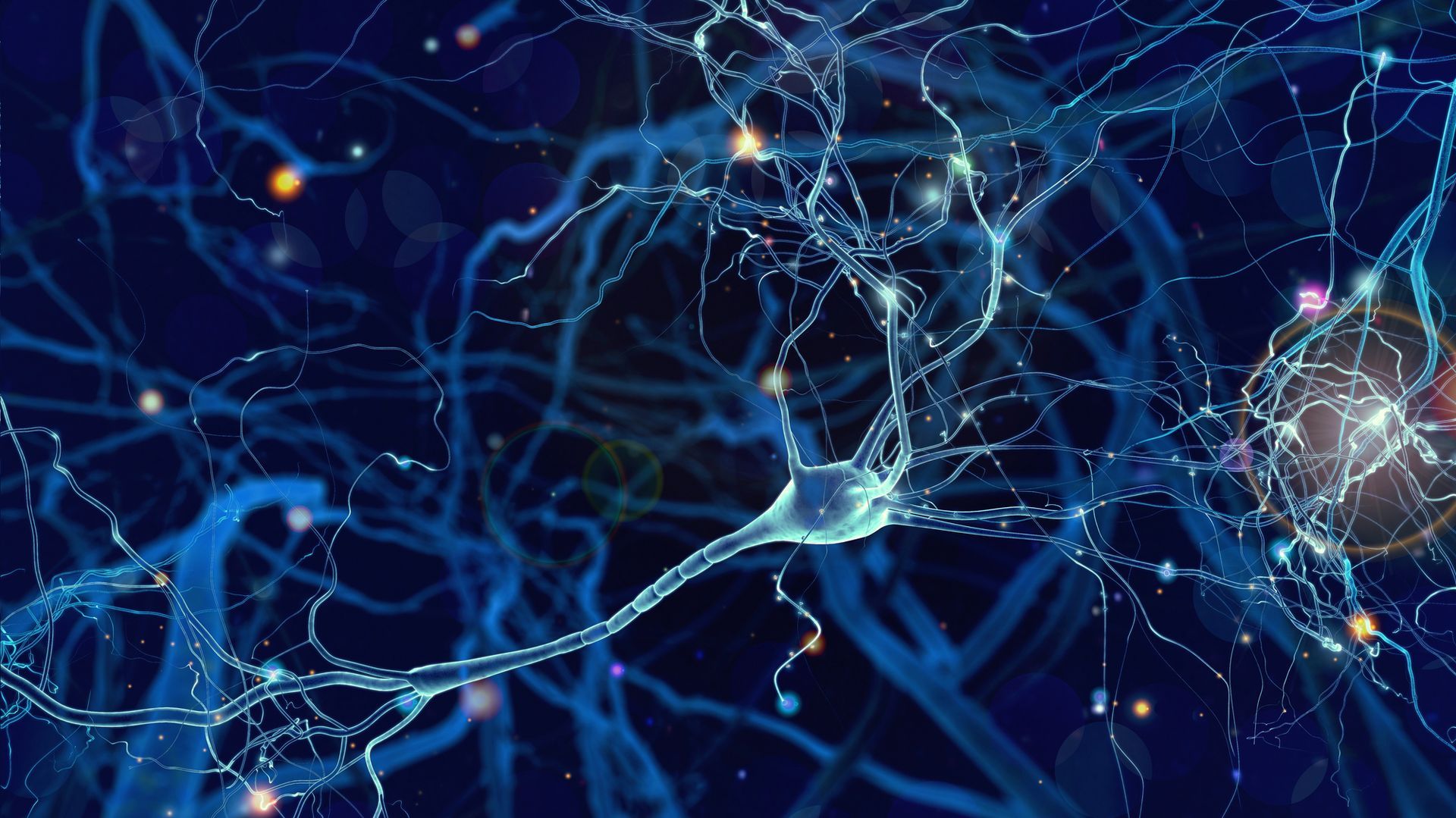
The central nervous system functions through organized networks of neurons that communicate along long extensions called axons. These pathways enable movement, sensation, cognition, and memory. When trauma, stroke, or other neurological injury disrupts them, communication fails, often resulting in permanent loss of function.
My research is focused on a clear objective: restoring communication within damaged neural circuits.
My interest in this problem began early. When I was young, my grandfather, an electrical engineer, told me the “wiring” in his back was broken. I knew from my father, an electrician, that wires could be reconnected. I was confused when my grandfather said it was impossible. That question stayed with me: why can damaged electrical systems be repaired, but damaged neural circuits cannot?
We pursue this through four complementary strategies: stopping axons from dying, reconnecting severed axons, replacing what is lost, and interfacing with restored circuits to measure and guide function. In practical terms, this means stopping the wiring from breaking, reconnecting broken connections, installing new wiring when needed, and ensuring that the repaired system is functioning properly. Together, these form an integrated framework for repairing the damaged brain.
This work is highly collaborative. At the University of Pennsylvania, I work with colleagues in neural tissue engineering, stem cell biology, neurosurgery, traumatic brain injury research, and neural interfaces. We also collaborate with partners at UT Austin, Mount Sinai, Dartmouth, Jefferson, and the VA Medical Center system. Repairing the nervous system requires coordinated expertise across disciplines.
1. Stop Axons from Dying
After injury, many axons do not disappear immediately. Instead, they enter a vulnerable period during which they may degenerate, expanding the functional impact of the initial insult.
This window presents an opportunity. If we can stabilize axons early and preserve their structural and metabolic integrity, we may retain critical pathways that would otherwise be lost. Even partial preservation of long tracts in the brain or spinal cord can yield meaningful functional benefit. Preservation does not eliminate the need for regeneration; rather, it raises the floor for successful recovery.
2. Reconnect Severed Axons
In some cases, axons are physically disconnected. Traditionally, such injury has been considered irreversible in the central nervous system. However, emerging research suggests that, under carefully controlled conditions, severed axonal membranes may be rejoined, restoring structural continuity.
If electrical conduction resumes across the repaired segment, the original neuron may continue to function. Rather than replacing neurons, we repair them.
We are evaluating how preservation strategies and membrane repair approaches interact in advanced preclinical models. Stabilizing axons early may increase the likelihood that reconnection succeeds. While not universally applicable, axon reconnection represents a meaningful shift in thinking: in certain contexts, damaged circuits may be directly repaired rather than rebuilt from scratch.
3. Replace What Is Lost
When damage cannot be repaired and native pathways cannot be restored, reconstruction becomes necessary. This is where engineered neural tissue plays a central role.
Our laboratory develops structured, living neural tissue derived from human stem cells, designed with aligned axonal tracts that function as organized conduits. Instead of injecting dispersed cells into an injury site, we implant tissue that already contains directional architecture.
We test whether these constructs can integrate with host circuitry and function as relays, transmitting signals across an area of injury. Using anatomical analysis, electrical recordings, and behavioral testing in chronic injury models, we evaluate both structural integration and functional transmission. The central question is whether signals can cross a previously silent gap.
This strategy is relevant to traumatic brain injury, stroke, spinal cord injury, peripheral nerve injury, and other conditions involving disrupted neural pathways, including optic nerve damage and Parkinson’s disease. Even partial restoration of communication could yield meaningful functional gains.
4. Interface with Restored Circuits
Restoring structure is only part of the challenge. Even when circuits are preserved, reconnected, or rebuilt, we must determine whether they are functioning as intended and how they can be optimized.
Recovery is rarely all or nothing. Signals may be weak, delayed, or incompletely coordinated. Without precise measurement, we cannot know whether a reconstructed pathway is transmitting information effectively or how to refine it.
We are therefore exploring biohybrid interfaces that allow engineered neural tissue to communicate with carefully designed electronic systems. These interfaces enable real time monitoring of electrical activity within restored pathways and may ultimately provide controlled stimulation to stabilize or enhance circuit performance.
Beyond validation, interfacing expands what recovery can mean. If neural signals can be reliably captured and interpreted, they may be used to guide assistive technologies, from functional stimulation systems to advanced prosthetic devices. In this way, biological repair and engineering augmentation need not be competing approaches. They can work together.
Biohybrid strategies do not replace biological repair. They strengthen it by improving safety assessment, validating performance, and increasing precision in guiding and extending restored neural function.
From Laboratory Science to Translation
Brain repair requires more than isolated breakthroughs. Preservation, reconnection, reconstruction, and circuit interfacing must operate within a coordinated framework. Reproducibility is essential. Engineered neural tissue must be manufactured consistently, with defined quality standards and measurable function to advance toward clinical use.
Over the past decade, advances in stem cell biology, neural engineering, and systems neuroscience have created capabilities that did not previously exist. The scientific tools are now in place, and the field has reached an inflection point. The challenge is no longer whether restoration is conceivable, but how to translate these capabilities into scalable, reliable therapies.
To advance this work beyond the laboratory, I am co-founding a mission-driven organization with Dr. D. Kacy Cullen, Will Houston, and Victoria Rothwell focused on scalable manufacturing and clinical development of engineered neural tissues. In parallel, through the Speculative Technologies BRAINS Fellowship, I am addressing this challenge at a systems level, integrating biological repair with precise circuit interfacing and translational infrastructure.
Progress will depend on partnership across sectors. Philanthropic investment can catalyze high-risk efforts. State and federal funding can sustain foundational science and shared infrastructure. Institutional commitment can align talent and long-term vision. With coordinated support, the tools now emerging in the laboratory can be responsibly advanced toward restoring neural communication in patients.
Why This Matters
For individuals living with paralysis, cognitive impairment, or sensory loss after nervous system injury, disrupted neural communication is life altering. Restoring even partial connectivity across damaged circuits could translate into regained independence and improved quality of life.
The approach outlined here, preserving vulnerable pathways, repairing what can be repaired, rebuilding what is lost, and interfacing with restored circuits to guide function, reflects a comprehensive strategy for recovery. Although significant challenges remain, advances in stem cell biology, neural engineering, and systems neuroscience have created capabilities that did not exist a decade ago.
The nervous system is not simply a metaphorical wiring system. It is a living network that demands both biological insight and engineering precision. When communication within that network is lost, meaningful recovery may require not only rebuilding structure but ensuring that restored circuits are functioning as intended.
I am deeply grateful to the Dan Lewis Foundation for supporting bold efforts in brain repair and regeneration. The scientific foundation is stronger than ever. The responsibility now is to translate these capabilities into therapies that restore neural communication and improve lives.