
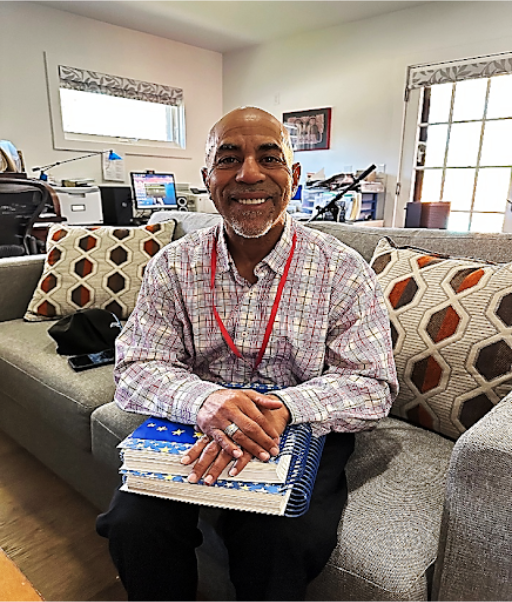
Marchell is an engaging and energetic middle-aged man who was enthusiastic about being interviewed for the DLF newsletter. He is an activist working to promote the rights and well-being of persons in the brain injury community, with a particular emphasis on helping persons with brain injury who are incarcerated or have been released from prison. Marchell is a successful businessman, proud of the company he co-founded--the Association of Young Business Owners (AYBOS), a marketing company in the Denver, Colorado area. He also works for Well Power (Denver’s Mental Health Center system) as a Zero Suicide Certified Peer and Family Specialist.
Marchell is clearly a man on the move to get a lot of positive things done. But this wasn’t always the case. Marchell spent much of his younger adult life incarcerated himself for a variety of crimes including robbery and assault. He had a history of recidivism following multiple releases.
He had serious difficulties with substance abuse and addiction. However, Marchell realized that learning was the key to bettering himself. So, for many years, most often still in prison, Marchell studied law, psychology, and marketing. In 2003, he co-founded AYBOS with help from another prisoner and from his brother Corey.
In 2016, Marchell participated in a neuropsychological assessment which identified a serious brain injury that occurred when Marchell was 10 years old. The injury, which happened when Marchell was a young passenger in a bad car accident, was identified as a factor in Marchell’s emotional dysregulation, poor judgement, deficient reasoning, anxiety, and agitation.
Marchell credits an insightful public defender who suspected Marchell’s history of childhood trauma and brain injury and referred him to the Men’s Transition Unit of the Denver County jail. In this program, Marchell participated in individual counselling and group services coordinated by Dr. Kim Gorgens, a psychologist teaching and doing research at the University of Denver. In this program, he learned the basics of mental health, a better understanding of his emotional problems, and an array of coping skills that help him direct his behavior in a positive direction and achieve stability and success.
It wasn’t until later in 2016 that Marchell, after so many years of being in and out of prison and facing consecutive sentences of lengthy duration, was paroled for the final time. He achieved parole largely because of his many years of study, the mental health services he received following the identification of his brain injury, and his determination in organizing fellow prisoners around the need for mental health services. He also motivated a cohort of about 40 prisoners to launch a letter writing campaign to legislators and other Colorado business and political leaders to increase awareness of mental health issues among the disproportionate number of prisoners with a history of brain injury.
When asked for advice to other brain injury survivors, Marchell lamented that most brain injury survivors in underrepresented communities have little knowledge about brain injury and its potential consequences; and often don’t understand the medical/psychological terms that professionals typically use when addressing them. As a peer counselor, Marchell translates such terms into simpler language that his peers can understand and relate to. Education is a key, in Marchell’s view, to understanding and coping with one’s deficits. He feels strongly that access to mental health services and community support is crucial. He also says that self-awareness and communicating about oneself with others is very important. According to Marchell, if feelings of anxiety, depression, agitation, fearfulness and shame remain hidden and unspoken they are likely to cause disorganized, self-destructive, or counter-productive behavior.
Like others that we have interviewed for the DLF newsletter, Markell is an inspiring individual. For most of his life, Marchell was not aware of how his childhood brain injury contributed to the many crises and mistakes in his adult life. Marchell has educated himself and worked hard to overcome the deficits and losses he has experienced. In this context, his achievements and positive attitude speak volumes about the man he has become. Marchell continues to work hard to develop professional skills and self-understanding, to be a positive force in his community…and to express gratitude for those who have assisted him along the way.